
Umaru Creative ·
Notes on GPT-5, Future AI and What It Might Mean for Us
Personal notes on GPT-5, bold AI predictions and the wider changes ahead — reflections from a web designer’s perspective in Finland.
Notes on GPT-5, Future AI and What It Might Mean for Us
AI has been moving so quickly that it is sometimes hard to pause and make sense of the headlines. The recent release of GPT-5 has sparked reactions ranging from excitement to disappointment — and some rather bold predictions about what the future could hold.
In this post, I’m sharing a few personal notes and takeaways, framed in a way that I hope is useful for small business owners and professionals here in the Nordics.
The Big Claims About GPT-5
OpenAI’s Sam Altman suggested in a recent interview that by 2035, models like GPT-8 might help cure cancer. He even spoke about AI reshaping science itself — where systems could propose experiments, interpret results, and accelerate breakthroughs that today take decades.
Other predictions were more unsettling. He speculated that by 2050, competition for computational power could be as destabilising as energy conflicts have been in the past. While that feels distant, it’s a reminder that technology shifts often come with social and political ripples.
Why These Notes Matter for Everyday Work
For most of us, AI’s role won’t be designing molecules or shaping global policy — at least not directly. Instead, the practical effects will show up in smaller, day-to-day ways:
- Tools that handle research or admin with less friction.
- Content or code that can be drafted faster, then refined by humans.
- Interfaces that are increasingly conversational rather than “search-and-click”.
As a designer, I’ve already seen clients in Finland adjusting how they present information online. Search traffic patterns are shifting because people now ask AI assistants directly instead of browsing websites. That’s not the end of the web, but it does mean our design choices need to adapt — clearer structures, more human-centred stories, and ways to integrate AI-friendly content.
A Note on Humility
Altman emphasised that society needs “unusual humility” to navigate these changes. I find that perspective healthy. No one really knows the exact pace of what’s coming. Predictions of cures, wars, or revolutions should be taken with caution, even as they signal that we’re entering unusual territory.
For small businesses and independent professionals, the more grounded question is: how do we make tools like GPT-5 serve our work without losing our distinct voice and values?
Takeaway
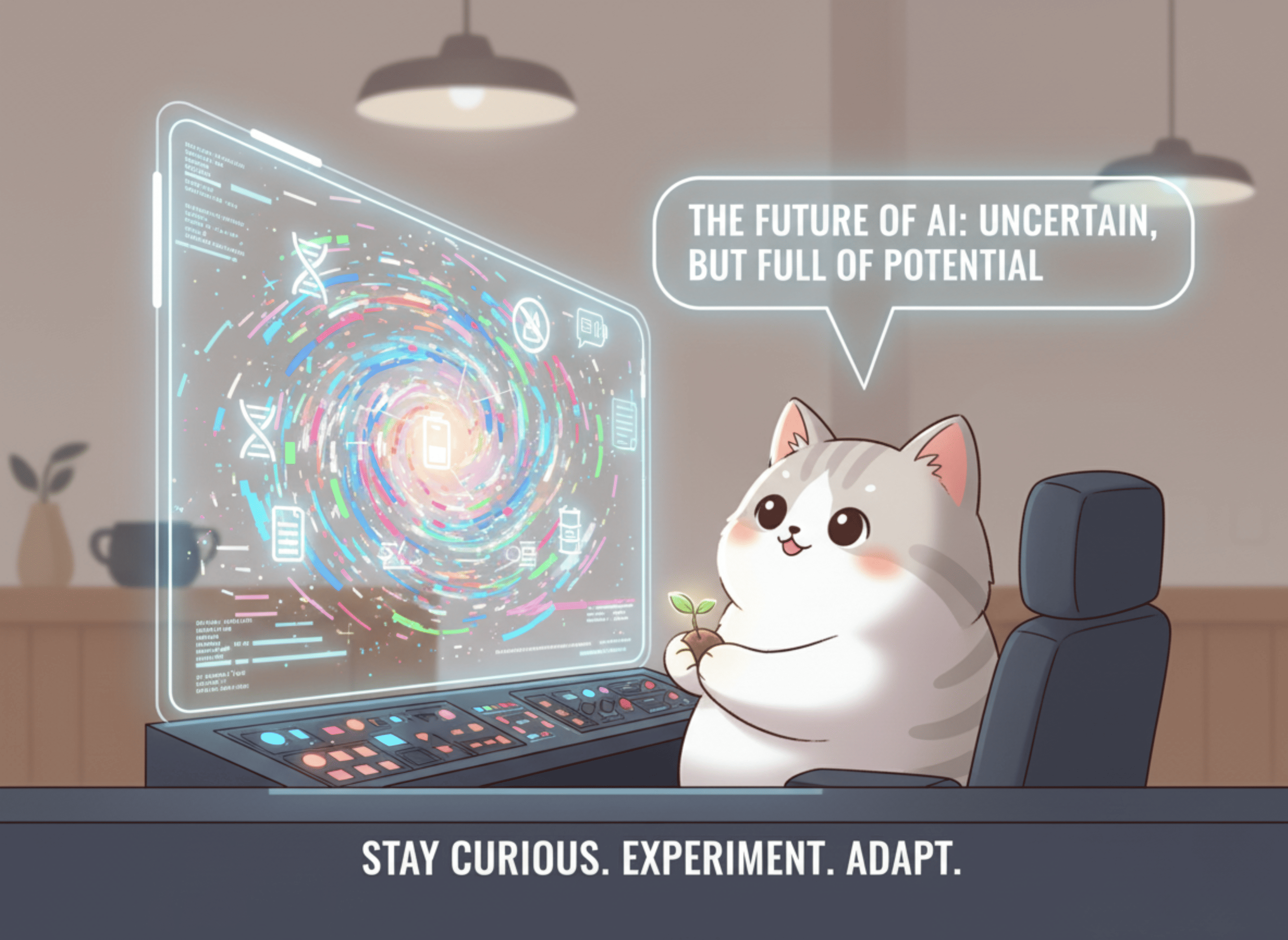
The future painted around GPT-5 ranges from inspiring to unsettling. For those of us running small businesses in the Nordics, the useful step is to stay curious, experiment with the tools at hand, and adapt gradually. None of us can control the global race for AI, but we can choose how to apply it thoughtfully in our daily work.